襖と障子——やわらかく仕切る日本の間仕切りFusuma and shoji — Japan's soft way of dividing a room
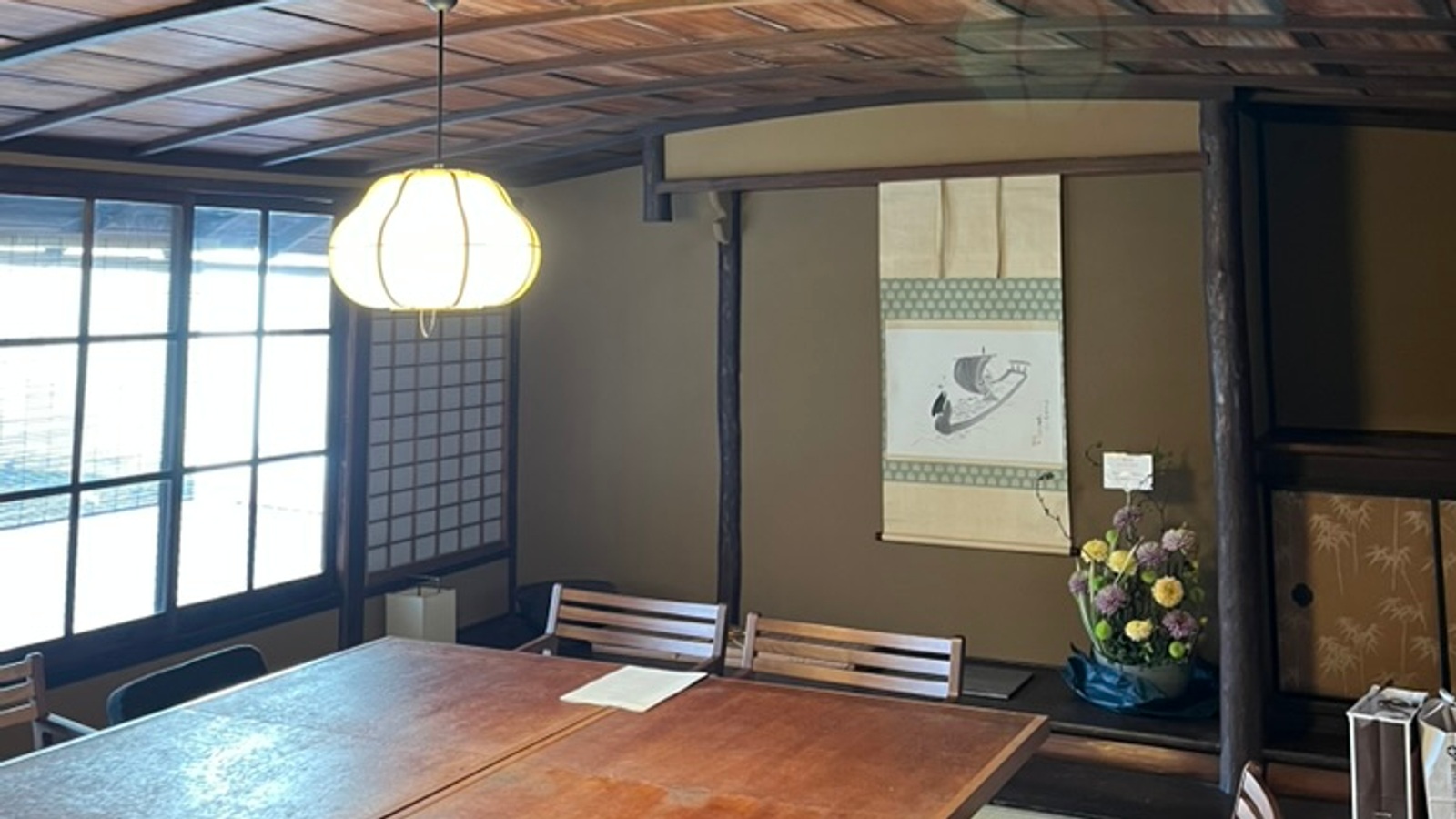
古民家の座敷を仕切っているのは、多くの場合、壁ではなく引き戸です。木の骨組みに厚手の紙を張った襖は、光を通さないぶん絵や色柄をのせられ、部屋と部屋のあいだを完全に隔てることも、開け放って一室として使うこともできます。一方の障子は、細い組子に薄い和紙を一枚張っただけの建具で、外に面した開口に立てられ、光をやわらかく拡散させながら室内に届けます。同じ引き戸でも、襖は「仕切る」ため、障子は「光を通しながら仕切る」ためのものと考えると分かりやすいところです。
どちらも鴨居と敷居という上下の溝に沿って滑らせるだけの単純な仕組みで、蝶番も金具もほとんど使いません。だからこそ、必要に応じて一枚だけ外したり、隣の部屋との仕切りをまるごと開け放って続き間にしたりと、暮らしに合わせて空間の大きさを変えられます。障子紙は年月とともに日に焼けて黄ばんだり、指のあたる場所から破れたりしていくもので、光の通り方が以前よりくすんできたと感じたら、張り替えどきの合図です。組子を傷めないよう紙をぬるま湯でふやかしてから剥がし、新しい和紙を張り直す——これも季節の変わり目に行われてきた古くからの手入れです。
内見で襖や障子を見るときは、まず溝に沿って軽い力ですっと滑るかを確かめてみてください。建物が年月とともにわずかに沈んだりゆがんだりすると、鴨居と敷居の間隔が変わり、建具が引っかかったり、逆に隙間ができて閉まりが悪くなったりすることがあります。紙の破れや黄ばみは張り替えで直せますが、滑りの悪さが枠のゆがみからきている場合は、建具屋に調整してもらう必要があります。壁ではなく引き戸で仕切られた家に住むとは、季節や人の集まりに合わせて部屋の形そのものを変えられる暮らしを選ぶこと。その柔らかさこそが、襖と障子の一番の値打ちです。In many kominka, what divides one room from the next is not a wall but a sliding door. A fusuma is a wooden lattice covered in thick paper — opaque, so it can carry a painting or a pattern, and able either to close a room off completely or to be pushed aside so two rooms become one. Shoji, by contrast, are built from a fine wooden lattice with only a single sheet of thin washi paper stretched over it, set into openings that face outside, where they let light in by scattering it gently rather than blocking it. Both are sliding doors, but it helps to think of a fusuma as something that divides a space, and shoji as something that divides a space while still letting the light through.
Both slide along a groove in the lintel above and the sill below, with barely a hinge or a fitting in sight. That simplicity is exactly what lets a household reshape its rooms as needed — lifting out a single panel, or opening an entire wall of them to join two rooms into one continuous space. Shoji paper yellows with age and tends to tear where fingers most often touch it, and when the light coming through starts to look duller than it once did, that is the sign it is time to re-paper. Softening the old paper with warm water before peeling it off, taking care not to damage the lattice, then stretching a fresh sheet of washi over it — this is a piece of seasonal maintenance that has been done in Japanese houses for generations.
When you view a kominka, try sliding a fusuma or shoji panel along its track with a light touch. As a house settles slightly over the years, the gap between lintel and sill can shift, so that a panel starts to catch, or, just as often, no longer closes snugly. A torn or yellowed paper is easy enough to fix by re-papering, but if the trouble is a panel that won't slide because the frame itself has shifted, that calls for a joiner to true it up. To live in a house divided by sliding doors rather than walls is to choose a home whose very shape can change with the season or the size of the gathering — and that flexibility is the real value of fusuma and shoji.