続き間の座敷——古民家の畳空間の使い方Tsugi-no-ma — how a kominka's connected tatami rooms get used
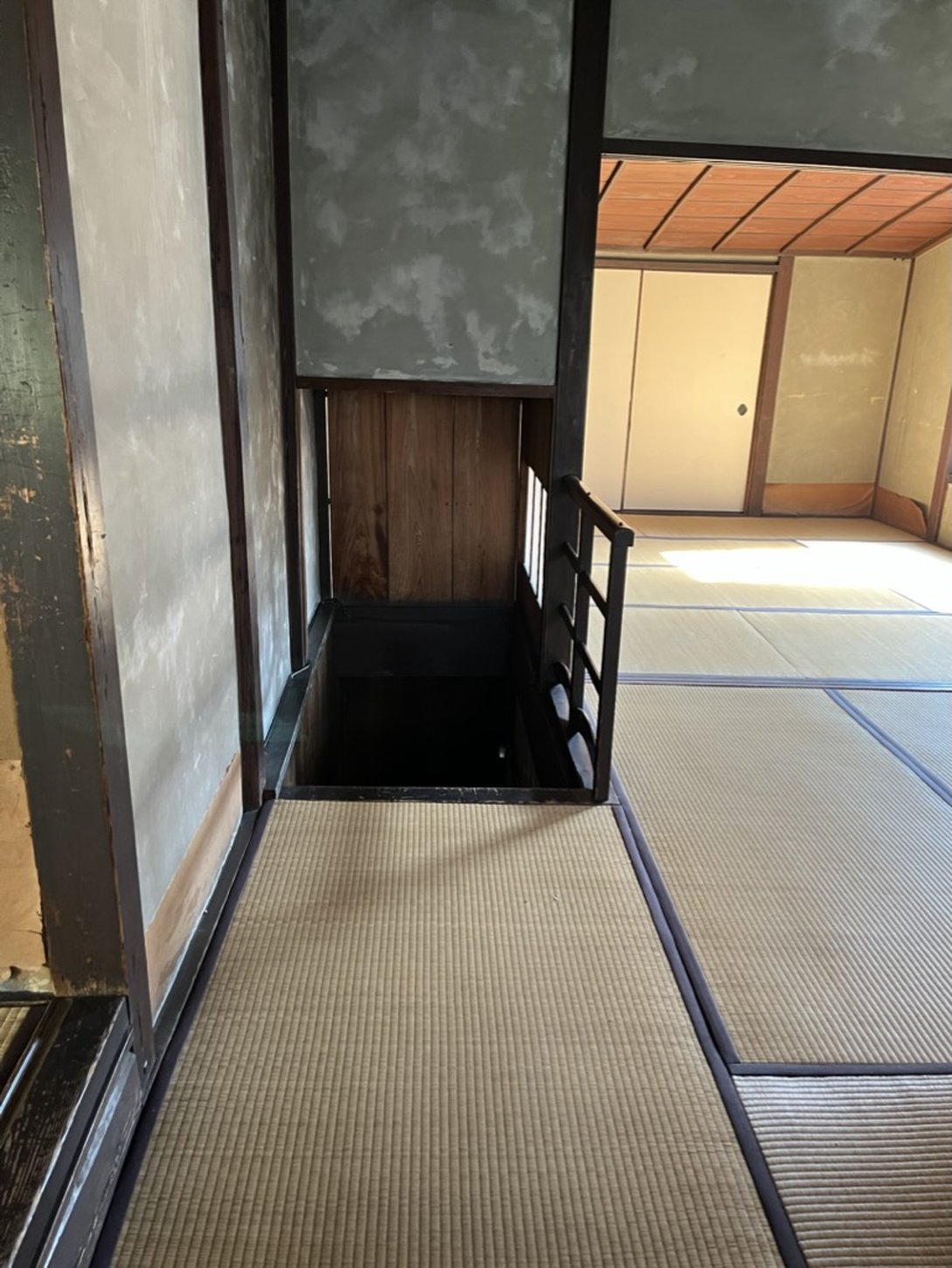
古民家の座敷を訪れると、畳の間がふすまを挟んでいくつも連なっていることがあります。これが「続き間」です。ふすまは壁と違って外したり開け放したりできるので、必要なときだけ二間、三間をひとつづきの広い空間に変えられます。ふだんは六畳と八畳に分けて使い、来客や法事のときだけふすまを外して十四畳の広間にする——古民家の間取りは、部屋の数ではなく、こうした可変性を前提に組まれています。
この仕組みが生まれた背景には、冠婚葬祭という非日常の場を家の中に持つ必要があったことがあります。結婚式や葬儀、法事のたびに大人数が集まる家では、ふだん使いの広さと、年に数回の広さの両方を満たさなければなりません。壁で仕切って部屋数を増やすのではなく、ふすま一枚で仕切りを消せるようにしておく——続き間は、めったに使わない広さのために部屋を余らせておく無駄を、うまく避ける工夫でもありました。
現代の暮らしでは、続き間はもっと日常的な使い方ができます。ふすまを閉めれば一方を寝室、もう一方を客間にできますし、開け放てばワークショップや教室、大人数の食事会にも使える一間になります。内見のときは、畳の枚数だけでなく、ふすまの立て付けが軽く動くか、鴨居に傾きがないかを見ておくと安心です。動きの軽いふすまは、家全体の歪みが少ない証拠でもあります。決まった正解の使い方がないからこそ、続き間は住む人の数だけ使い方が生まれる空間です。Step into the zashiki of a kominka and you often find several tatami rooms running one after another, separated only by fusuma — sliding paper-and-wood doors. This is a tsugi-no-ma, a "connected room." Unlike a wall, a fusuma can be lifted out or slid fully open, so two or three rooms can become one continuous space exactly when that space is needed. Day to day the house might sit divided into a six-mat room and an eight-mat room; for a guest or a memorial service, the fusuma come out and the two become a single fourteen-mat hall. A kominka's floor plan is built less around a fixed number of rooms than around this kind of flexibility.
The arrangement grew out of a real need: a house had to hold the occasional large gathering — a wedding, a funeral, a memorial service — inside a home built for everyday, much smaller use. Rather than adding walls and rooms to cover the rare occasion, a single removable fusuma let the partition disappear when it had to. The tsugi-no-ma was a way of avoiding the waste of a room that sat spacious and empty most of the year.
In a present-day household, that same flexibility can serve far more ordinary purposes. Close the fusuma and one room becomes a bedroom, the other a guest room; open them and you have one long room fit for a workshop, a lesson, or a dinner with more people than usual. When you view a house like this, it is worth checking not only how many mats each room holds but how lightly the fusuma slide, and whether the lintel above them runs level — a fusuma that moves easily is itself a sign that the frame of the house has not shifted much. Because there is no single correct way to use a tsugi-no-ma, it tends to end up used in as many ways as there are people living with it.