出格子と虫籠窓——京町家の表構えを読むDeguoshi and mushiko windows — reading a machiya's street face
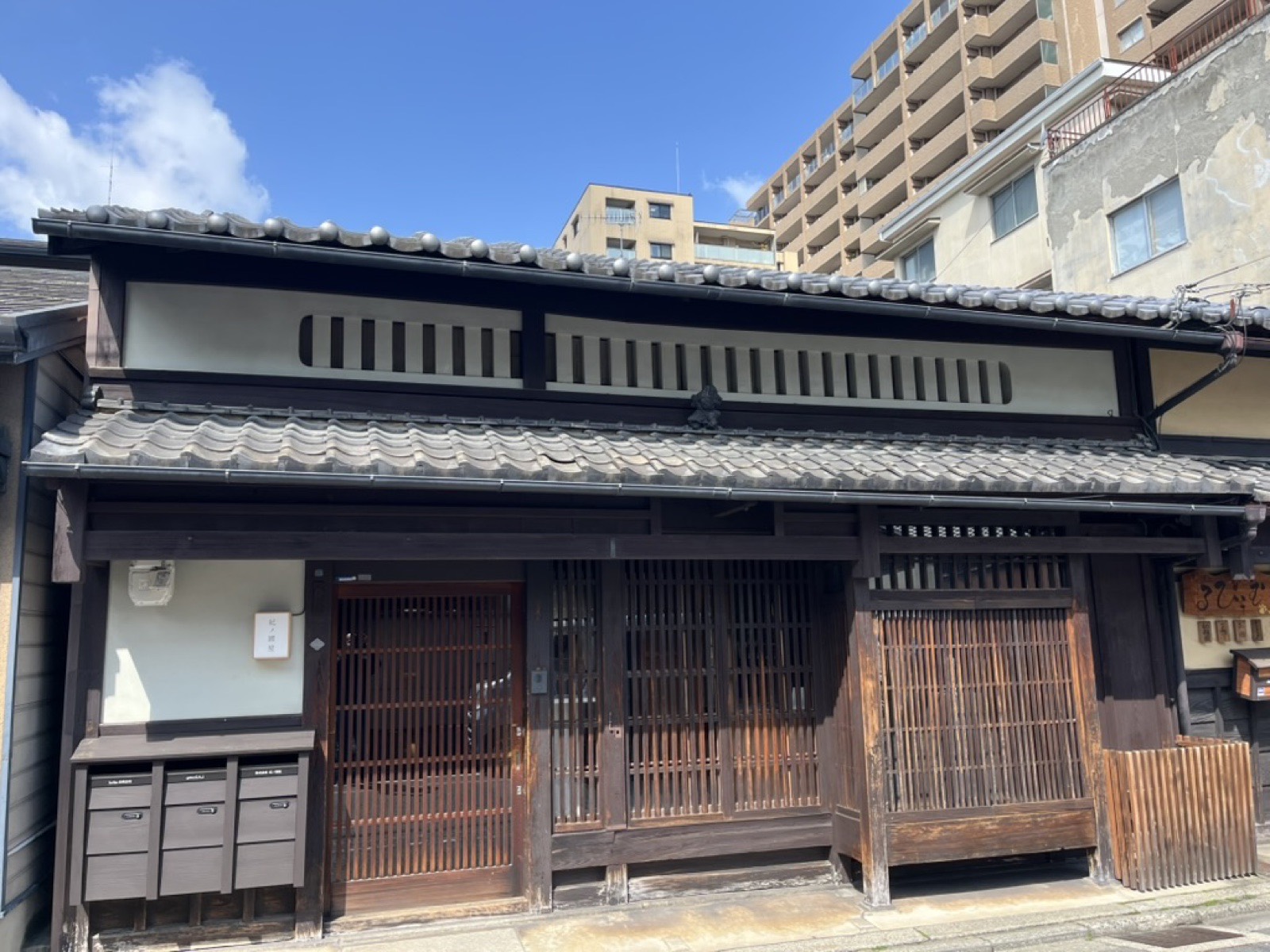
京町家の前に立つと、まず目に入るのが一階の「出格子(でごうし)」です。道路側にわずかに張り出した格子で、内からは通りの気配がよく見え、外からは家の中が見えにくい。細い木を等間隔に並べただけの構えですが、光と風を通しながら視線をやわらかく遮る——京町家の格子は、閉じきらずに間合いをとるための仕掛けです。
二階を見上げると、土壁に塗り込められた縦格子の小窓があります。これが「虫籠窓(むしこまど)」。虫籠のように見えることからその名がつきました。もともとは二階を物置や低い天井の空間として使った名残で、採光と通風を確保しつつ、防火の役割も担っていたと言われます。格子の太さや間隔、塗り方には地域や時代で違いがあり、表構えはその家の来歴を静かに物語ります。
出格子も虫籠窓も、飾りのためだけにあるのではありません。通りに開きながら、暮らしはそっと守る。京町家の格子と虫籠窓は、街並みと調和しながら住み手の心地よさを保つ、表構えの知恵そのものです。町家の前を通るときは、ぜひ一度、その表情を見上げてみてください。Stand before a Kyo-machiya and the first thing you notice is the deguoshi, the timber lattice of the ground floor. Projecting slightly toward the road, it lets those inside sense the street clearly while keeping the interior hard to see from outside. It is nothing more than slender wooden bars set at even intervals, yet it passes light and breeze while softly blocking the gaze — a machiya's lattice is a device for keeping distance without shutting the house away.
Look up to the second floor and you find small vertical-barred windows worked into the earthen wall. These are mushiko-mado, "insect-cage windows," so named because they resemble a cage for keeping insects. They remain from a time when the upper floor served as storage or a low-ceilinged space; they secured light and ventilation while also, it is said, helping to guard against fire. The thickness of the bars, their spacing, and the way they are plastered differ by region and era, so the street face quietly tells the history of each house.
Neither the deguoshi nor the mushiko window exists merely for ornament. Open to the street, yet quietly protecting daily life — the lattice and mushiko windows of a Kyo-machiya are the very wisdom of the street face, keeping the resident comfortable while staying in harmony with the townscape. When you pass a machiya, do look up once at its expression.