弘化三年の墨書——家に残された時間An inscription from 1846 — the time a house keeps
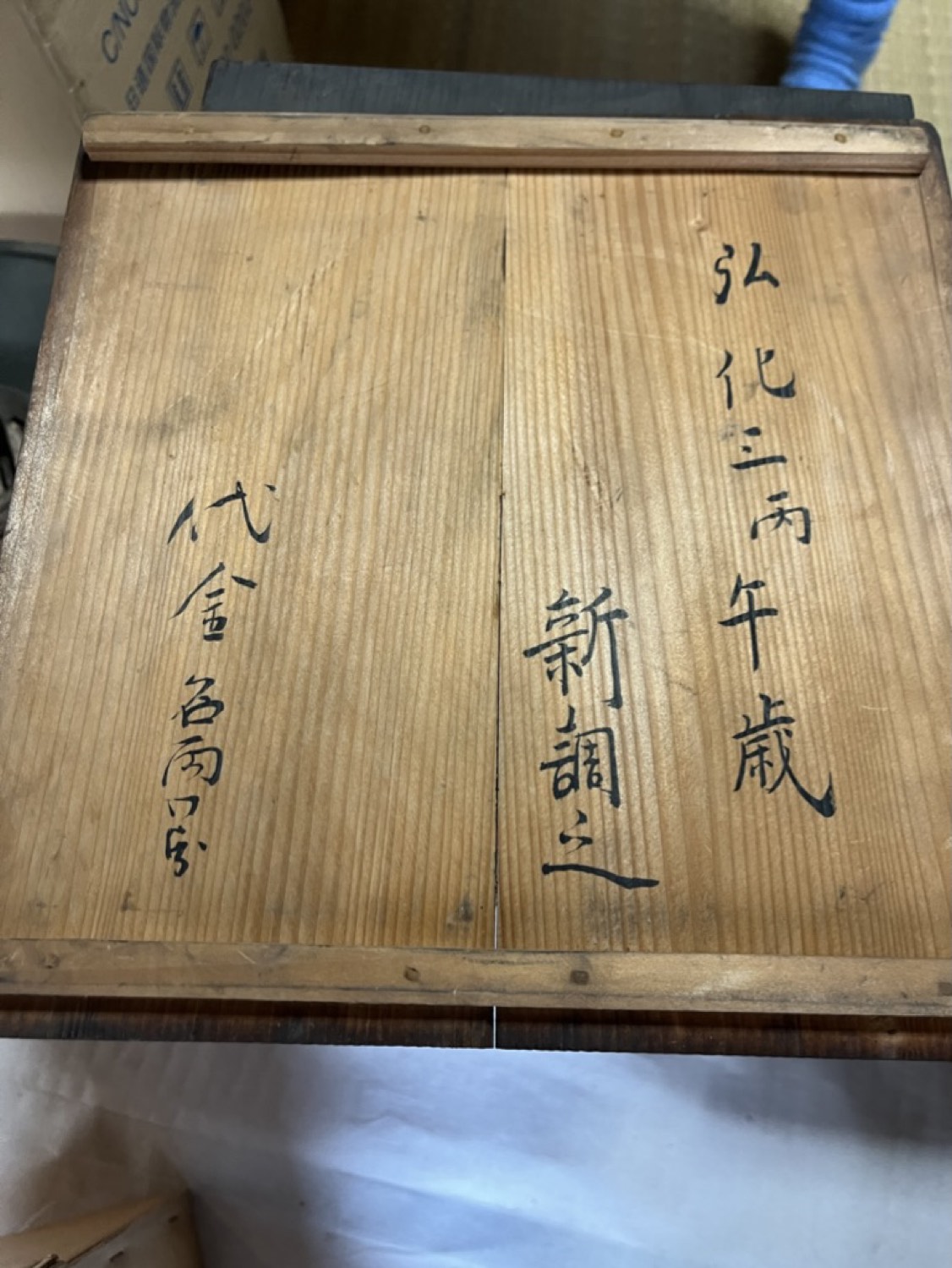
古い家を引き継ぐと、思いがけないものに出会います。松下町の町家では、木箱の蓋にこんな墨書が残っていました——「弘化三丙午歳 新調之」。弘化三年は西暦一八四六年、いまから百八十年ほど前。丙午(ひのえうま)の年に誰かがこの箱をあつらえ、年と代金を書きつけ、家とともに使い続けてきたのです。
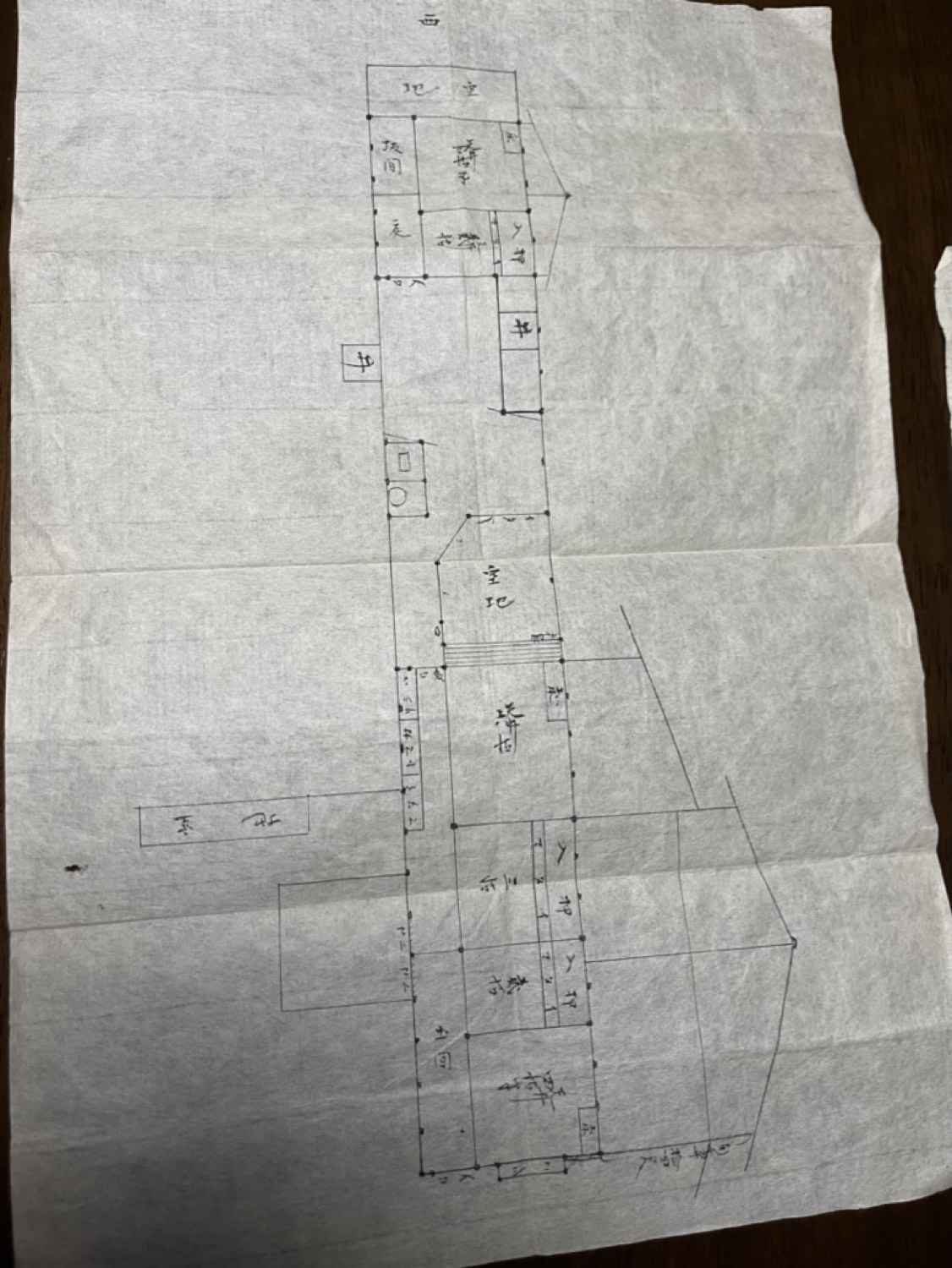
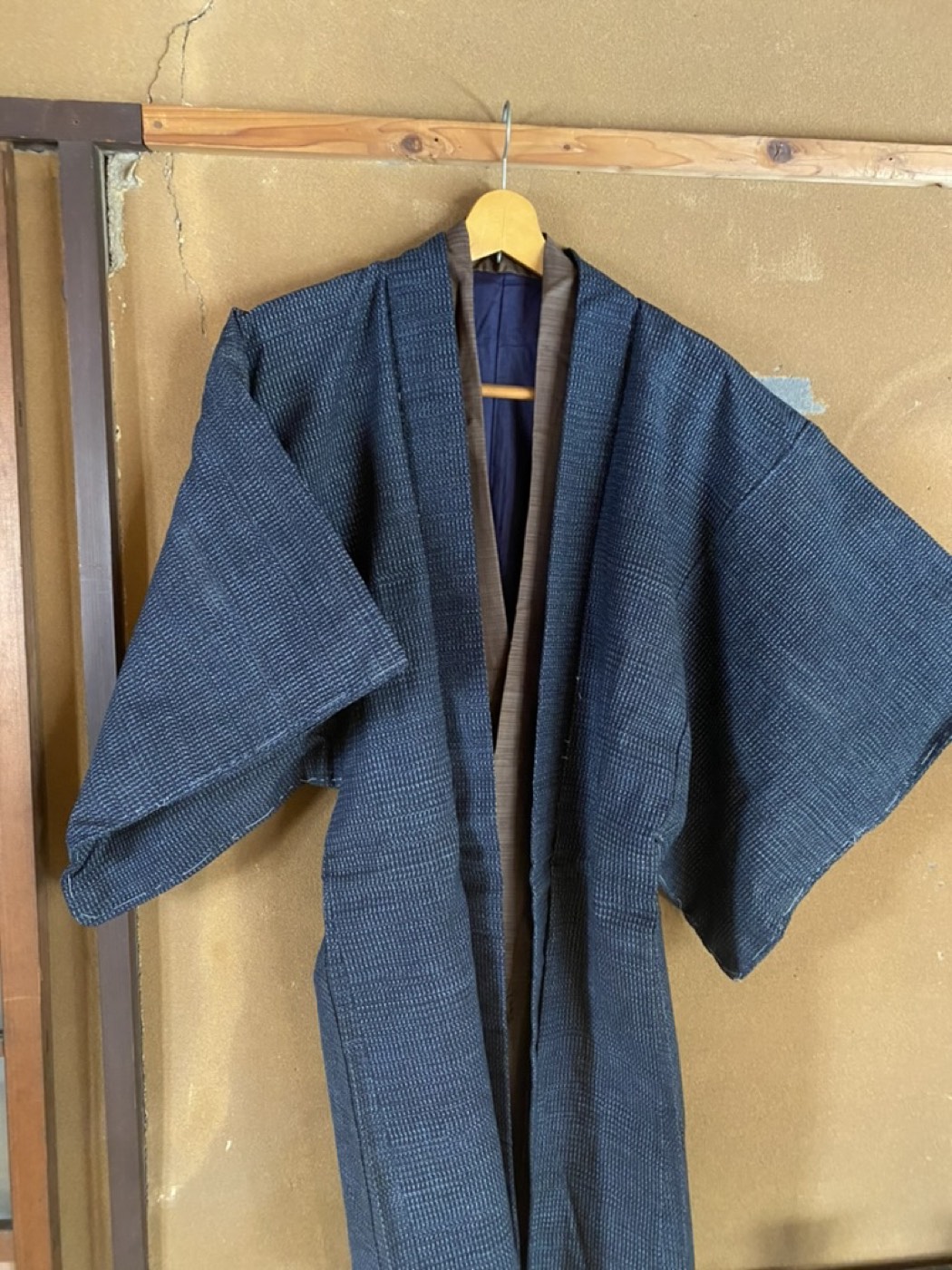
蔵や押し入れからは、手描きの間取り図、藍染の野良着、古い帳面なども出てきました。どれも飾りではなく、暮らしの道具として実際に使われ、繕われてきたものです。
家は、建物そのものだけでなく、こうした時間も一緒に預かっています。古民家を住み継ぐとは、柱や梁を受け取ることであり、同時に、ここで重ねられてきた暮らしの記憶を受け取ることでもある。私たちは、そう考えています。Take over an old house and you meet unexpected things. In the Matsushita machiya, the lid of a wooden box still bore this inscription: "Koka 3, the year of the fire-horse — made anew." Koka 3 is 1846, some 180 years ago. In that year of the fire-horse, someone had the box made, wrote down the year and its price, and kept using it along with the house.
From the storehouse and closets came a hand-drawn floor plan, indigo work clothes, old ledgers. None were ornaments; each had been an actual tool of daily life, worn and mended.
A house holds not only the building but this time as well. To carry on a kominka is to receive its posts and beams — and, at once, the memory of the living that has accumulated here. That is how we see it.