通り庭という動線——京町家を貫く土間Tōri-niwa — the earthen passage that runs through a Kyo-machiya
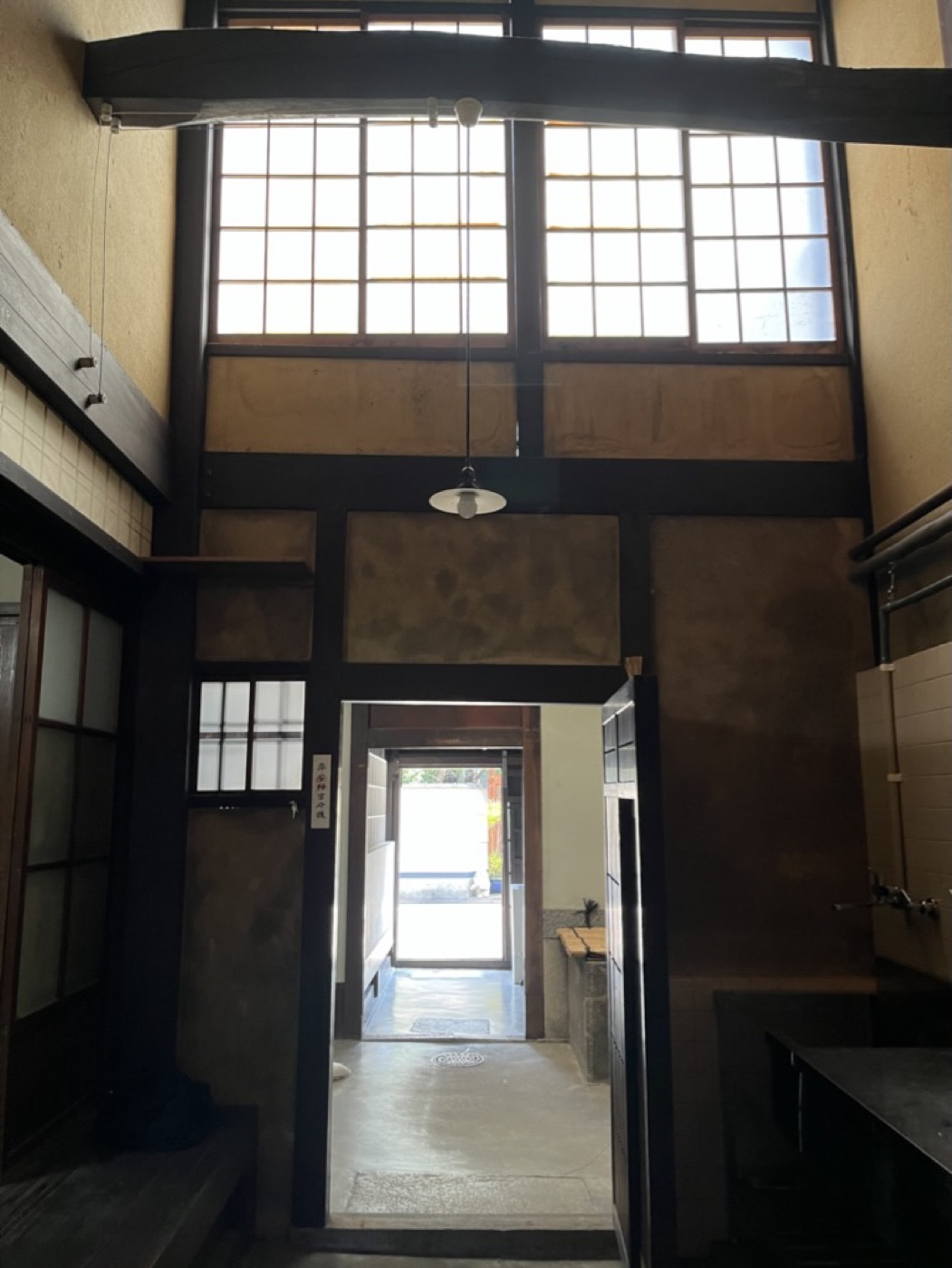
京町家の格子戸を開けると、奥へ細長く続く土間が目に入ります。これが「通り庭(とおりにわ)」で、表の入口から台所、その先の奥庭や蔵まで、家を前後に貫いて一本につながっています。表の玄関にあたる部分と台所まわりの「走り庭(はしりにわ)」とを呼び分けることもありますが、履物のまま家の奥まで歩いていける一続きの土間、という点は変わりません。
間口が狭く奥行きの深い京町家では、部屋は通り庭に沿って前から順に並びます。通り庭があることで、奥の部屋へ行くのに手前の部屋を通り抜けずに済み、表で商いをしていた家では、客と家族の動線を重ねずにおくこともできました。同時にこれは風の道でもあり、表の格子から入った空気は土間を伝って奥庭へ抜け、台所の上に吹き抜けた火袋が熱と煙を上へ逃がします。
今の暮らしでも、土間は使いでのある場所です。靴のまま入れて水で流せるので、自転車や雨具、土のついた野菜の置き場になりますし、居室とは段差ひとつで隔てられているぶん掃除もしやすい。京町家を見に行くときは、通り庭が奥まで通り抜けられるかを確かめてみてください——後年の改修で台所が壁で仕切られ、通り抜けが失われている家も少なくなく、そこが残っているかどうかで夏の風の通り方がずいぶん変わります。Slide open the lattice door of a Kyo-machiya and the first thing you see is a narrow earthen floor running deep into the house. This is the tōri-niwa, and it connects the street entrance, the kitchen, and the rear garden or storehouse in a single line from front to back. The entrance end and the kitchen end — the latter sometimes called the hashiri-niwa — may go by different names, but they form one continuous earthen floor you can walk the length of without taking off your shoes.
In a machiya, narrow at the street and long from front to back, the rooms sit in a row alongside the tōri-niwa. Because the passage exists, you can reach a room at the back without walking through the rooms in front of it; in a house with a shop at the street end, that kept customers and family from crossing paths. It is also a path for air: what comes in through the lattice travels the length of the earthen floor to the rear garden, while the open shaft above the kitchen — the hibukuro — carries heat and smoke upward.
An earthen floor still earns its place in a present-day household. You can walk on it in shoes and rinse it with water, so it takes bicycles, wet umbrellas, and vegetables with soil still on them, and the single step up to the living rooms keeps the dirt where it belongs. When you go to see a machiya, check whether the tōri-niwa still runs all the way through — later renovations often walled the kitchen off and closed the passage, and whether it survived makes a real difference to how the house breathes in summer.